That title is word soup but your boy is hungry some good broth and you should be too. I’m taking my time right now because there’s something that is driving me. Organizing my thoughts. I think the library is definitely a place for team players but there’s so many teams… and so many players, and so these vertiginous labyrinths I create in each post could be more visceral, more earthly and grounded more cohesive, and still autonomous from the collective work.
Lets talk about librarians that play for their team. Ten toes in.
First up? Dr. Arnulfo D. Trejo. Dr. Trejo was internationally known as a librarian. He pursued education in multiple countries and was a significant voice and advocate for expanding Latino materials in library collections. He was born in Mexico and still served in the U.S. Army earning some awards. While that is amazing that is not where his story plateaus or becomes mundane. His resilience did not allow him to be buried under the weight of the opinions of a country that would not acknowledge or recognize his contributions. No that wasn’t it for him. He became a “Professor Emeritus at the University of Arizona, establishing and directing the Graduate Library Institute for Spanish Speaking Americans (GLISA) within the School of Information Resources and Library Science” (REFORMA, 2025). He was the Author of Several Books including Directory of Spanish-Speaking/Spanish Surnamed Librarians in the United States (1973, Rev. 1986), and an Editor and contributor to The Chicanos: As We See Ourselves (1979). His work was critical in Founding the organization REFORMA in 1971 and in increasing Latino presence in libraries. Eight years after his transition in 2009 Latinos represented 3,488/114,227 of credentialed librarians or about 3.05% in the U.S. (Diversity Counts, 2012). We thank him for his Contributions to LIS and for the waves that he created. Here’s a Picture of the Esteemed Professor:
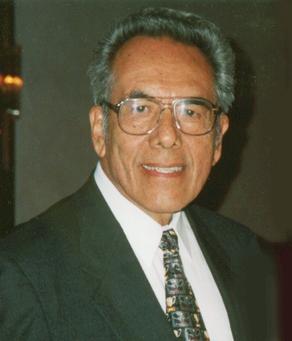
(REFORMA, 2025)
Who else want some.
Lets take a look at Alex Soto, an Indigenous Librarian that was named director of Labriola National American Indian Data Center. Soto received his master’s degree in library and information science from the University of Arizona’s Knowledge River Program in 2020 and ascended to new heights. He is a member of southern Arizona’s Tohono O’odham Nation and has “developed and implemented culturally informed library services, expanded its personnel four-fold, and re-established its physical locations as culturally safe spaces for Indigenous library users” ( ASU, 2025) He has co-authored a land acknowledgement statement on behalf of the Labriola Center. These kind of statements acknowledge history and presence of Indigenous communities and promote respect and recognition. Soto is a frequent collaborator with ASU’s Community Driven Archives and values “difficult conversations and careful determinations” (Lewis, 2021) In 2009 Indigenous Americans and native Alaskans represented about 584/115,972 of Library Assistants or about 0.50% of the total in the U.S. (Diversity Counts, 2012). We thank him for Representing his history his land and his story. Here is the handsome fellow:
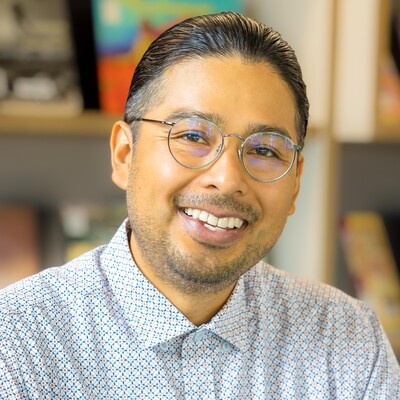
(ASU, 2025)
Who up? Dorothy Porter up.
Dorothy was an avid reader and writer that grew up in Virginia in the early 20th century. She graduated from Howard and moved to New York during the Harlem Renaissance. Her professional interests included cataloguing and preservation and all things Africana. She received her library science degree from Columbia and became the chief librarian at Howard in 1930. (forgive me for breaking voice but she was one bad mama!) She is proof that libraries are radical sites of resistance. We thank her for continuing to strive and creating foundations and trailblazing. In 2009 credentialed black librarians comprised 6,005/114,227 of the workforce or about 5.25% (Diversity Counts, 2012). I know personally that percentage is even lower for Black male librarians in the U.S currently. Here’s is a photo of the indefatigable pioneer:
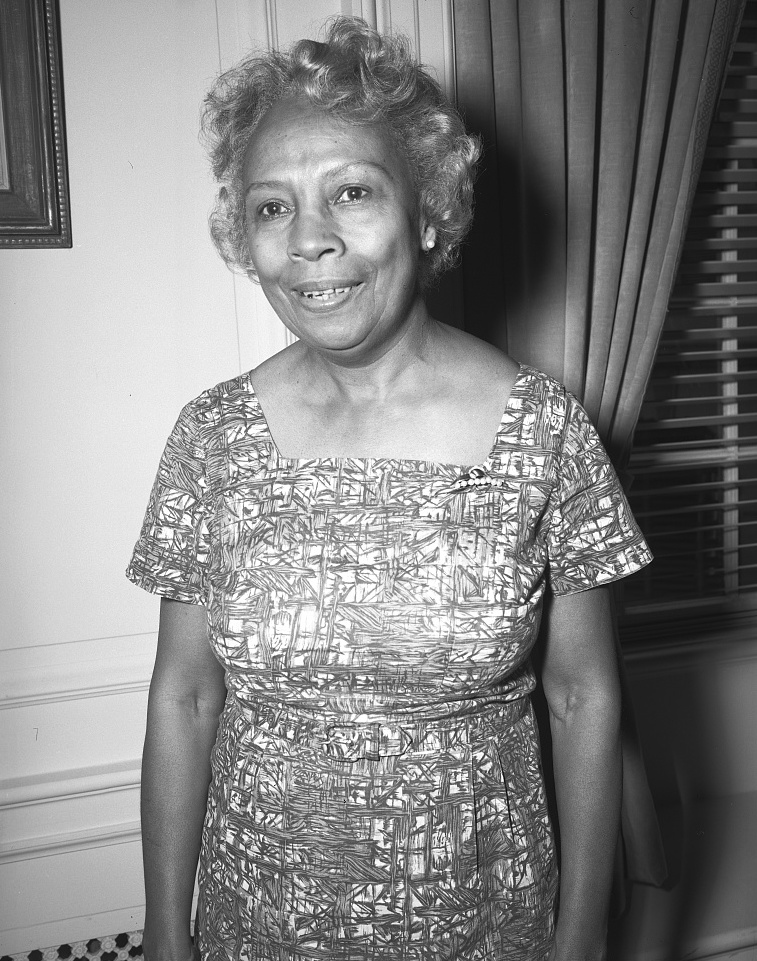
(Library of Congress. Photoduplication Service, 2018)
Looking at these examples of extraordinary human beings as pioneers its easy to feel as though your contributions aren’t gaining traction. But I say hey, get in where you fit in. Team players are more than the mere appurtenances to library staff, toiling away, doing the work and being unrecognized. I want to build a library that aptly describes the American character, with all of its edges, lines, heights, and dimensions. I don’t know about you friend but this quick read energized me. I’m still organizing some of these ideas but the story is far from over. Benefit someone today if you can and share your hope.
Best,
sources
“Alexander Soto.” Alexander Soto , ASU, search.asu.edu/profile/953804. Accessed 2 Jan. 2025.
“Diversity Counts.” American Library Association, 2012, http://www.ala.org/aboutala/offices/diversity/diversitycounts/divcounts.
“Dr. Arnulfo D. Trejo Librarian of the Year Award.” REFORMA, REFORMA, 2024, http://www.reforma.org/loty.
Lewis, Britt. “Alex Soto Named Director of Labriola National American Indian Data Center.” Alex Soto Named Director of Labriola National American Indian Data Center | ASU News, 27 Aug. 2021, news.asu.edu/20210827-university-news-alex-soto-named-director-labriola-national-american-indian-data-center.
“What Dorothy Porter’s Life Meant for Black Studies – JSTOR DAILY.” JSTOR, 22 Aug. 2018, daily.jstor.org/what-dorothy-porters-life-meant-for-black-studies/.
 The Information Professional
Leave a comment